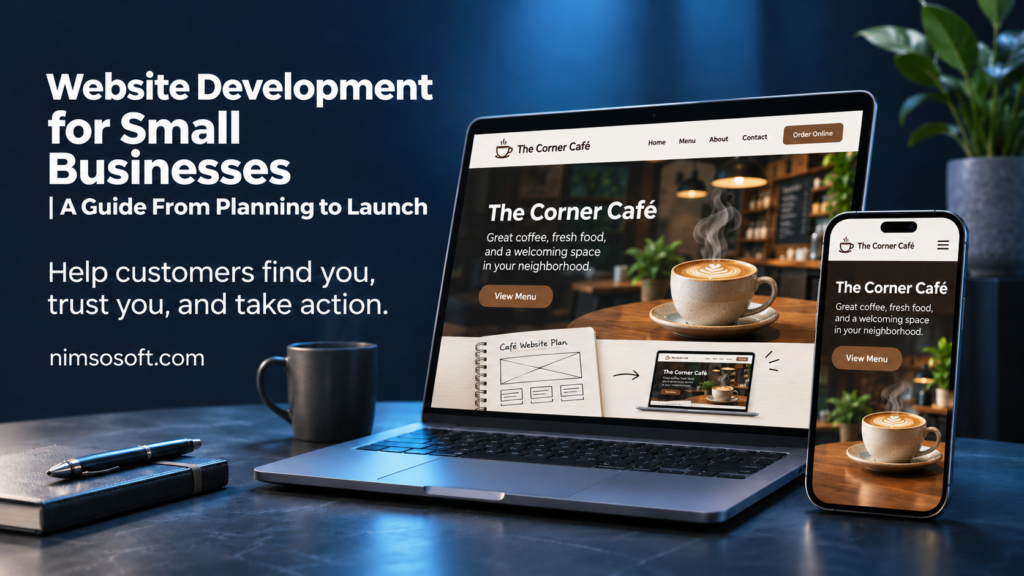
Website Development for Small Businesses | A Guide From Planning to Launch
 BusinessW
Website development is crucial for your online presence. Your website should help someone decide whether to buy, book, or contact you. A customer who wants a quote needs to know what you offer, where you work, and how to reach you. Every page should answer a real customer question or help a visitor complete a task.
What Is Website Development?
Website development is the process of building, testing, launching, and maintaining a website. It includes creating pages, setting up navigation, and making features such as forms, booking calendars, and online payments work. Front-end development covers what visitors see and use, such as menus, page layouts, and buttons. Back-end development handles tasks behind the scenes, such as saving orders or checking appointment availability. A content management system, or CMS, gives your team a way to publish articles and update pages without editing code.

For more information click here:
What Should You Plan Before Building a Website?
Start by choosing the main action you want visitors to take. A service business might prioritize quote requests. A clinic might focus on bookings. An online store needs product pages and a checkout process that customers can complete on a phone. List the pages and information each customer needs before taking that action. A courier company, for example, could publish separate pages for domestic and international shipping. Each page could explain the areas it serves, the information customers need for a quote, and how to request a pickup. Gather your copy, photos, and contact details before development begins.
Which Website Platform Should You Choose?
Choose a platform based on your required features, budget, and who will manage the site. A website builder may suit a small business that needs a homepage, a few service pages, and a contact form. A CMS such as WordPress can suit a team that publishes articles and updates service pages regularly. An ecommerce platform can handle product listings, inventory, and checkout. Consider custom development when your business has requirements that standard tools cannot meet, such as a customer portal with account-specific pricing. Compare the initial build cost with ongoing expenses for hosting, subscriptions, and maintenance.
How Does the Website Development Process Work?
A typical project moves through planning, design, development, testing, and launch. Planning defines the pages and features. Design sets the page layouts and navigation. Development builds the site and connects tools such as contact forms, booking calendars, and payment services. During testing, follow the same steps a customer would take. Open the site on your phone, find a service page, and submit a quote request. Then check that the inquiry reaches the correct inbox and that the visitor sees a confirmation. For an online store, place a test order and check the payment, order confirmation, and inventory update.
What Makes a Website Easy to Use?
An easy-to-use website loads quickly, fits smaller screens, and makes the next step clear. Visitors should be able to read the text without zooming, find contact details without opening several menus, and complete forms without guessing what to enter. Compress large images, use readable text with good contrast, and give each form field a visible label. Test whether someone can navigate your pages using a keyboard. Use specific buttons such as “Request a Quote” or “Book an Appointment” so visitors know what to expect when they click.
How Can Website Development Support Search and AI Discovery?
Give every important page a clear topic and answer its main question in the opening paragraph. Use descriptive page titles, headings that reflect customer questions, and internal links that lead to related services or explanations. Put important details such as service areas, delivery options, and prices in readable page text. For example, if people ask whether your courier company offers same-day pickup, state where it is available, the cutoff time, and how to book. A direct answer with specific details gives readers, search engines, and AI tools enough context to understand the offer.
What Should You Do After Your Website Launches?

Measure the actions that matter to your business, such as completed bookings, quote requests, or purchases. If visits increase but inquiries stay flat, check whether customers can find the contact button, understand your offer, and submit the form on mobile. Assign someone to update business hours, prices, and service details. Schedule backups and software updates, and retest forms or checkout after major changes. If you’re planning a new site or updating an existing one, visit nimsosoft.com to discuss your website development needs with Nimsosoft.
Frequently Asked Questions About Website Development:
How much does website development cost?
The cost depends on the number of pages, the design, and the features you need. When comparing quotes, check whether they include content, hosting, integrations, and support after launch.
How long does website development take?
The timeline depends on the scope and how quickly your team provides content and approves designs. A small site with ready-to-use copy usually takes less time than an online store with a large catalog and custom integrations.
What is the difference between web design and website development?
Web design defines how pages look and how visitors move through them. Website development builds those pages and makes features such as forms, booking systems, and checkout work.
Can I update my website myself after launch?
Yes, if your website uses a CMS or website builder and you have editing access. Ask for a walkthrough so you can update text, replace images, and publish new pages.
Nimso Soft · Nov 16, 2026